



I remember Andy Lewis perched on a ledge of the Jonte cliffs in the south of France, back when highlining had ceased to be just a climbers’ pastime and had become a world of its own. It was the mid-2010s, a time when the world wasn’t doing so badly: the two war criminals, Putin and Netanyahu, were already there, but a certain Barack Obama was keeping them in check.
In Millau, France, a historic mecca for climbing alongside the Tarn and Jonte Gorges, a handful of enthusiasts were giving up rock climbing to walk on straps stretched across the void. Théo Sanson, Nathan Paulin, Lukas Irmler, Antony Newton, Pablo Signoret, Danny Mensik, and a few others were part of this generation that no longer sought merely to climb a “vase” on the Jonte or one of the Tarn’s vertiginous walls, but to inhabit the space, the void.
Better yet: they wanted to push two cliffs as far apart as possible, constantly increasing the length of the highline. It was a major undertaking at the time, since the webbing—stretched like a bow—and its backup were set up by hand, without drones, of course. Andy “Sketchy” Lewis was already a legend. And Sketchy Andy, the father of slacklining, had decided to make a detour to Millau, the new center of the tightrope-walking world.
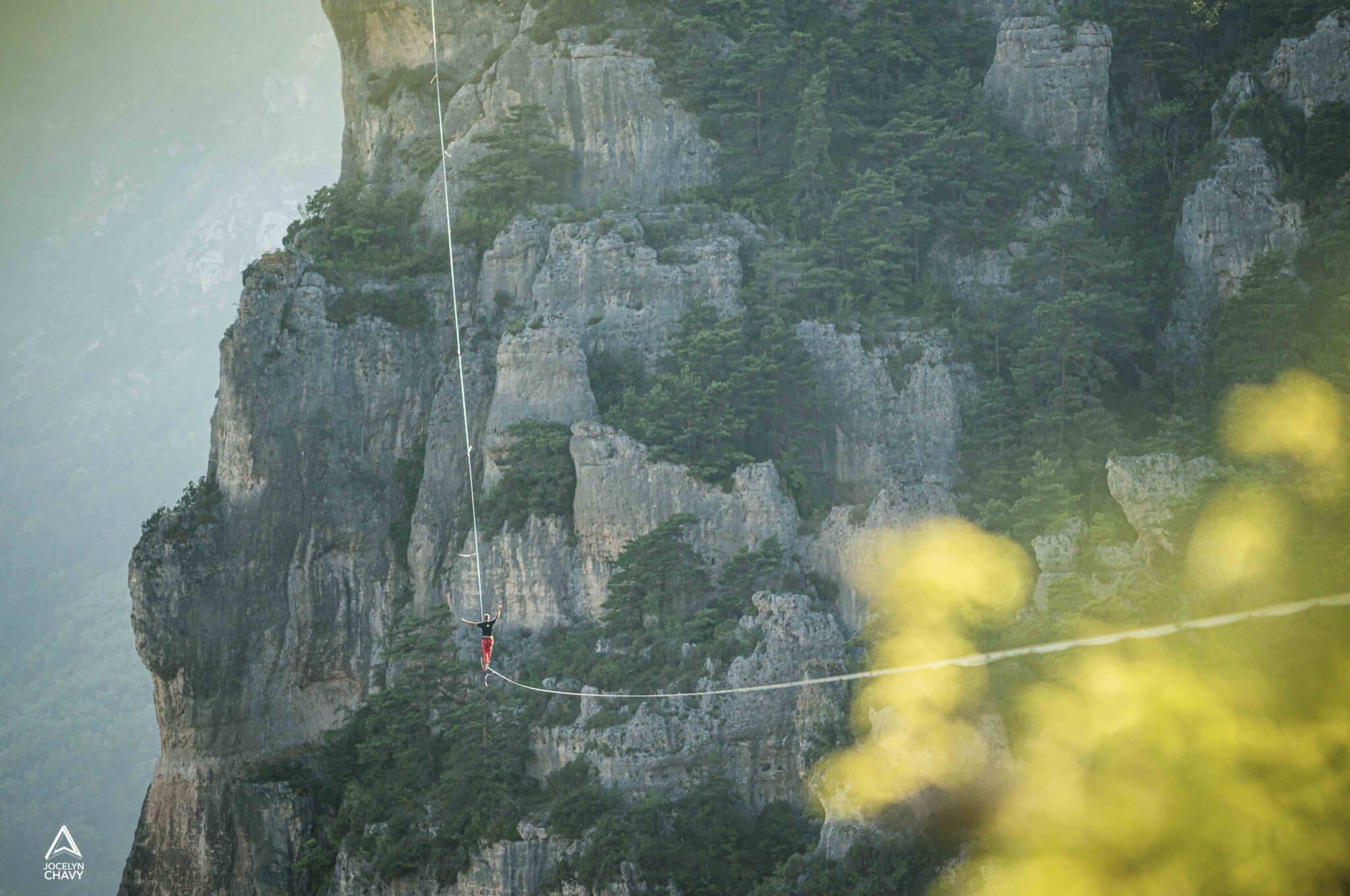
Lukas Irmler, Natural Games 2015 ©Jocelyn Chavy
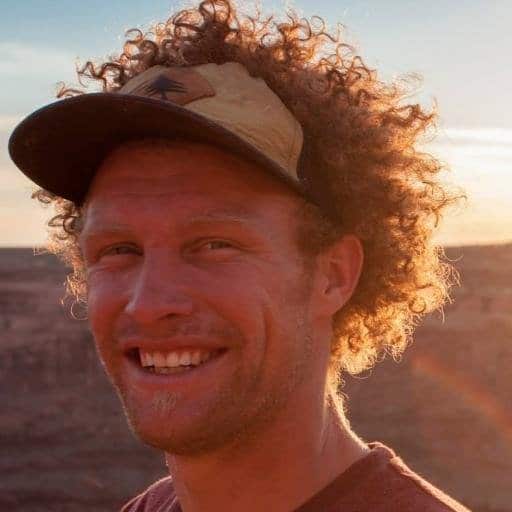
Andy Lewis had the look of a comic-book hero: broad shoulders like a mover’s, a huge smile, and the easygoing wit of an adventurous soul. I can still picture that tall guy perched with us at the top of the cliffs, in the golden light of the Jonte Gorges, speaking loudly, laughing a lot, incredibly friendly. He had that rather rare gift of making it seem like freedom wasn’t just a concept, but a very concrete way of life: tightening a strap, looking down into the void, and walking across it. Slacklife forever.
Larger than life
Andy Lewis
Andy Lewis died on June 14 near Moab, Utah, in a BASE jumping accident. Moab had become his kingdom, his base camp, his playground, and the place where he shared his passion. After slacklining and highlining, like others before him—notably the late Antony Newton—he had become a BASE specialist, with that same intensity, that same blend of technique and instinct, of seriousness and challenge.
We could talk endlessly about these paths, about this trajectory leading from cliff jumping to the ultimate aerial sport. But Andy, for his part, never seemed to be seeking risk alone. Andy was a larger-than-life guy, and he had inspired a whole bunch of people with his energy.
Andy left a profound mark on modern slacklining. As the first slackline world champion in 2008, then a multiple winner on the Gibbon circuit, he helped bring the discipline out of its niche. Highline openings, fully solo crossings, a Guinness World Record, TV performances like the 2012 Super Bowl with Madonna: Andy Lewis had done it all with that blend of physical presence and absolute nonchalance that made him instantly recognizable.
I also have another memory of him—funny and zany, but so true to his character. It was in Friedrichshafen, Germany, at the Outdoor trade show. A line was strung between two trees, at a height that was already unnerving, above a crowd that was already pretty tipsy. Andy arrived, started his show, then stripped down before walking the slackline naked as a jaybird, amid the shouts and laughter of a wild audience.
It was free, over-the-top, a bit silly, but obviously unforgettable. But it wasn’t just about provocation. It was his way of reminding everyone that slacklining, before it became a section at Decathlon, was also a celebration, a middle finger, a declaration of freedom—just as the Flying Frenchies celebrated it back in the day.
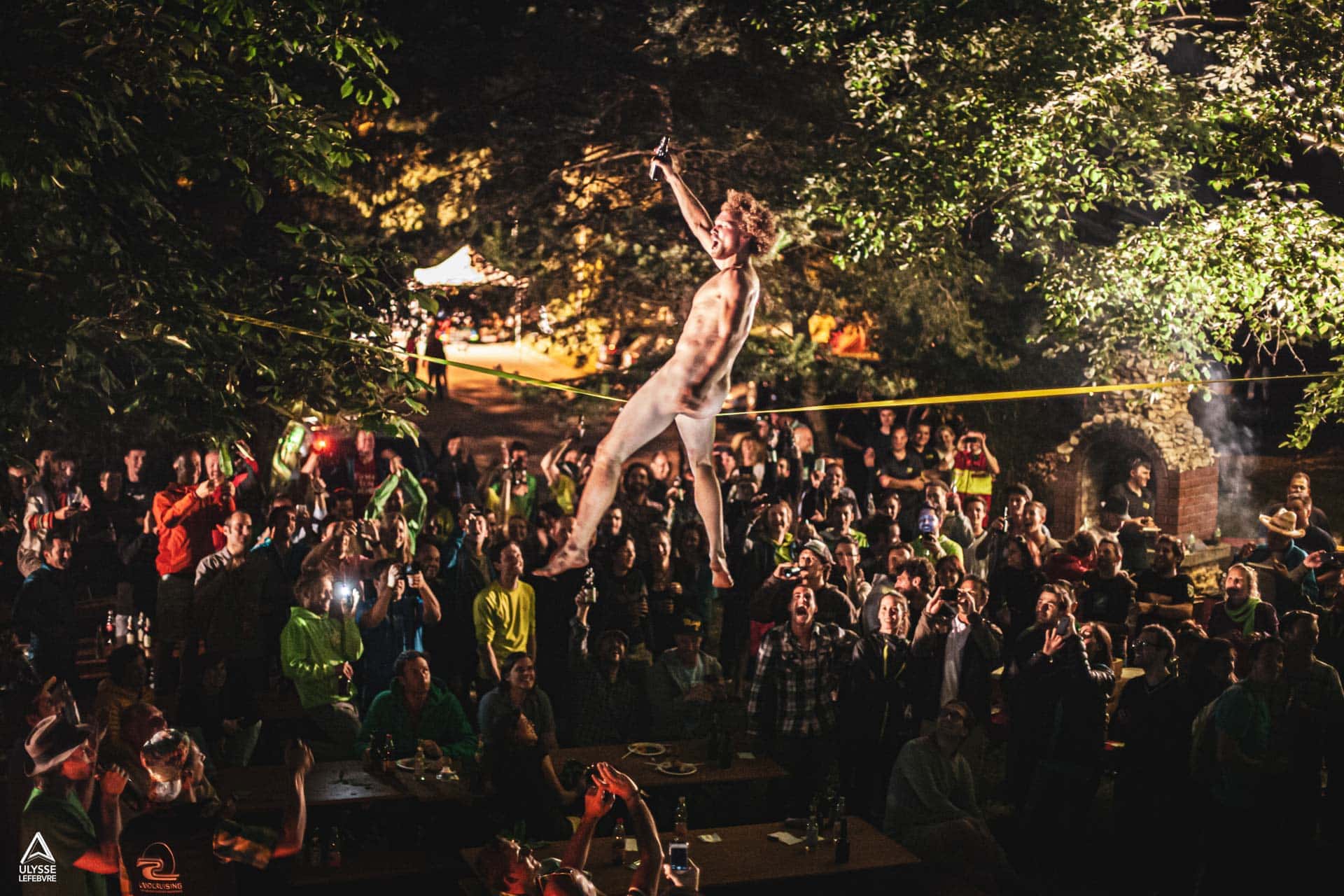
Andy Lewis lors de la fameuse fête à Friedrichshafen ©Ulysse Lefebvre
“Andy Lewis was the wildest of us all,” wrote Thomas Huber in his tribute. Andy belonged to a generation that pushed the boundaries—literally. Before, the cliff was the goal. For him, for Anto, and for the others, what mattered was the space between two cliffs, the tamed void, the mastered balance.
Andy Lewis embodied an era, a deliberate carefree attitude, and elevated provocation to a way of life
Andy Lewis embodied an era, a chosen carefree spirit, and elevated provocation to a way of life. Like perhaps the climbers of the Verdon in the 1970s, or the Stone Masters in Yosemite, he showed that it was possible to live more intensely. I only met him a few times. But he is one of those encounters that stay with you, because they capture a moment, a youth, an evolution in mountain sports. Andy Lewis wasn’t just a highline star. He was living proof that a strap stretched between two cliffs could open up a whole new world.