


Guillaume Pierrel has died in the mountains. Writing those words feels almost impossible. Guillaume was a friend. He was swept away by an avalanche in Pakistan.
He was a mountain guide, skier, climber, and filmmaker. In just a few years, he had become one of the most remarkable figures in steep skiing. But listing his achievements, however impressive, does not truly convey who he was. Behind his movie-star looks and disarming smile, Guillaume had a heart of gold.
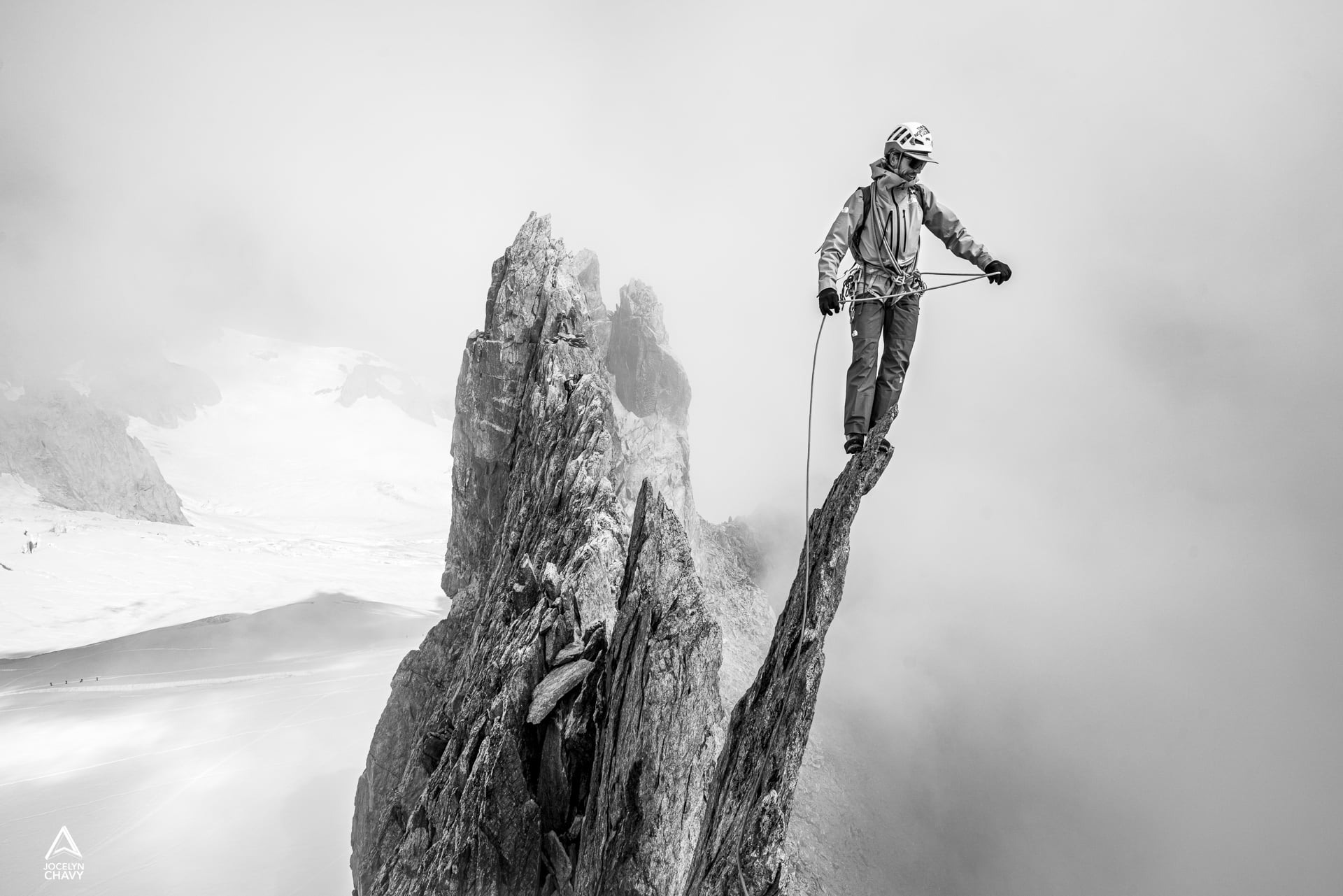
Guillaume Pierrel. ©Jocelyn Chavy
Guillaume had skied from the 8,035-meter summit of Gasherbrum II. He had descended the Shroud, the ribbon of snow suspended across the north face of the Grandes Jorasses. He had put his skis into the improbable Niche des Drus, thirty-eight years after Bruno Gouvy. On the Grands Charmoz, alongside Aurélien Lardy, he skied the unlikely north face, completing his own trilogy of extreme descents and repeating a line that had not been skied in nearly thirty years.
In New Zealand, with Christina Lustenberger, he opened three new lines in the Southern Alps within the space of a few days, including Hunter’s Moon on Aoraki–Mount Cook. That final descent—3,300 feet of hard snow on exposed terrain—ranked among the most difficult he had ever completed. A few months later, the two skiers made the first ski descent of Mount Robson, the giant of the Canadian Rockies, through an immense couloir dropping nearly 10,000 vertical feet.
Those descents alone would have filled several lifetimes
Those descents alone would have filled several lifetimes, even for an exceptional mountaineer or ski alpinist.
Guillaume loved wild summits and rare lines—the ones you barely notice, or the ones everyone can see but no one imagines could ever be skied, such as the Pointe Louis Amédée with Vivian Bruchez. He could study a face for a long time, waiting for the snow to settle, waiting for the impossible to become merely very difficult. That was how he approached the Shroud: watching it from La Flégère before finally skiing it—on November 11.
Before committing to a line, he wanted to know who had been there before him. He would uncover an old photograph, a forgotten name, and begin tracing the story backward. I remember his excitement, while making his first film, O’Parizad, at the prospect of meeting Louis Audoubert, the great French guide who had climbed Gasherbrum before him. His enthusiasm was contagious.
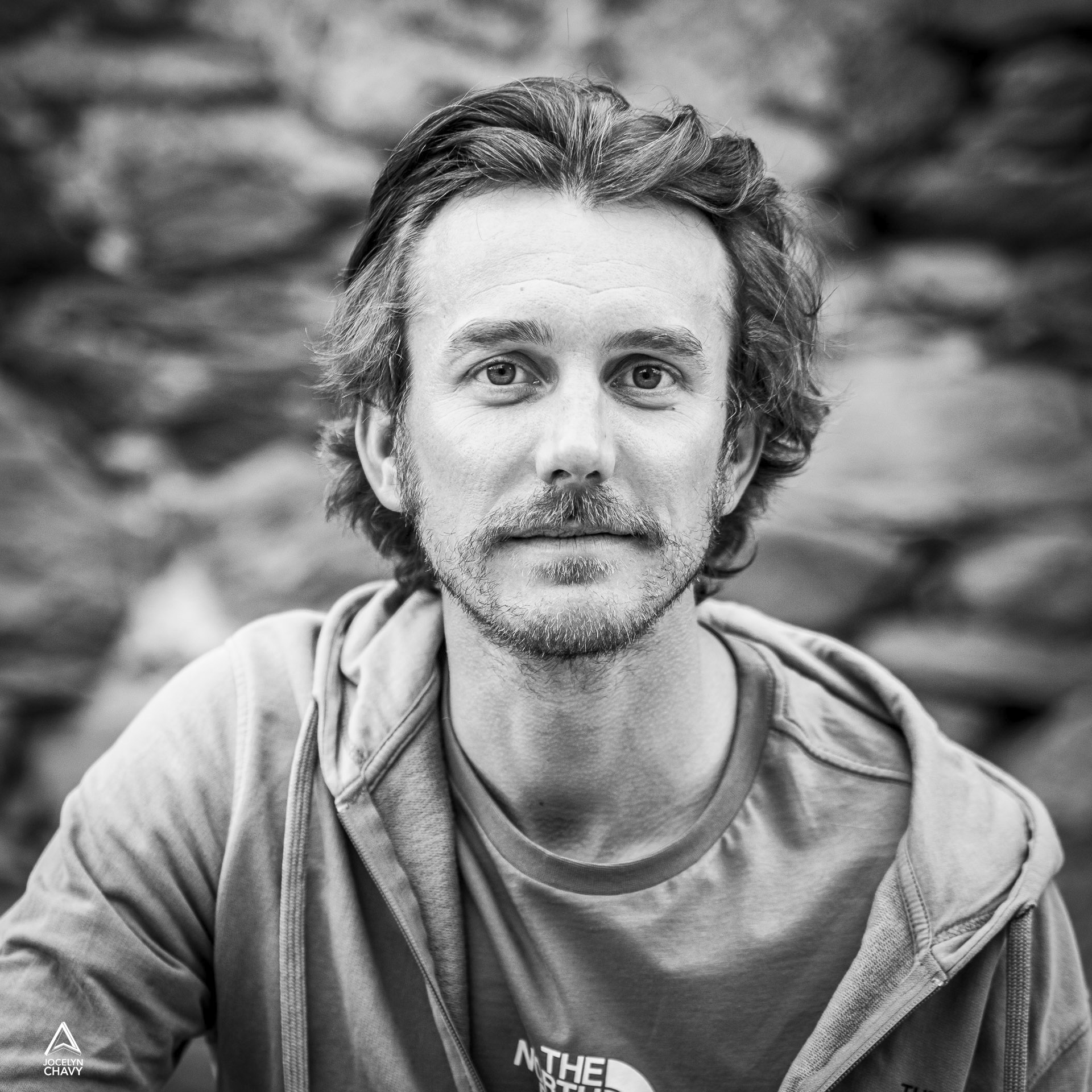
Guillaume Pierrel ©JC
On Gasherbrum II, Guillaume, Tiphaine Dupérier, Boris Langenstein, and Aurélia Lanoë chose the spur first climbed by the 1975 French expedition. They reached the summit without supplemental oxygen or high-altitude porters, then descended on skis. It was an extraordinary achievement. But Guillaume chose to tell a different story.
His film O’Parizad paid tribute to Louis Audoubert and his companions, to the climbers of the 1970s who had pioneered the route whose legacy Guillaume was now carrying forward.
That was deeply characteristic of him: to know the mountain, and better still, to know its history and the stories of the climbers who had passed through it.
In the Niche des Drus, he followed the flamboyant shadow of Bruno Gouvy. On the Grands Charmoz, that of Emmanuel Ballot. In New Zealand, he named one of his descents Mullet Direct in memory of American climber Michael Gardner, who died on Jannu.
For Guillaume, mountaineering and steep skiing were as much a culture as a practice—a memory handed down between those who love the high peaks. Born in the Vosges and based in Chamonix, he had also climbed all eighty-two of the Alps’ 4,000-meter summits, an accomplishment of which he was particularly proud.
He also had a taste for shared adventures. It is impossible to speak of Guillaume without mentioning Boris Langenstein, Tiphaine Dupérier, Lucien Boucansaud, Vivian Bruchez, Adèle Milloz, Aurélien Lardy, Christina Lustenberger, and so many others.
In a world that sometimes turns mountaineers into solitary heroes, Guillaume spoke about his friends, his partners, and everything they had experienced together.
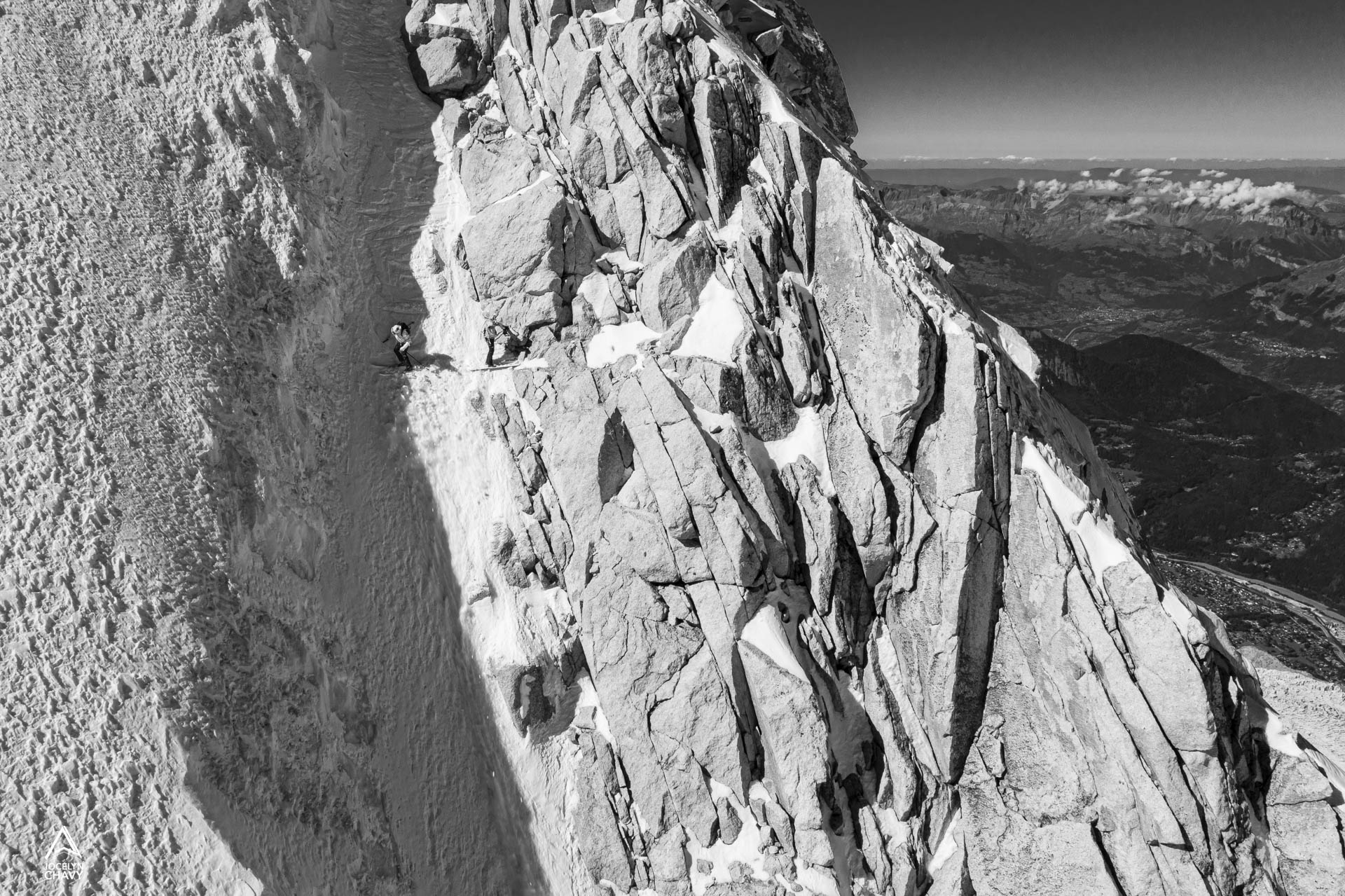
Contamine-Négri, mont-Blanc du Tacul. Guillaume Pierrel with Mike Arnold (right). ©JC
Guillaume was ambitious, but without the egocentrism that sometimes accompanies great ambition. He could take on the most intimidating mountains while retaining a sense of lightness and curiosity, and a desire to live a story that went beyond technical difficulty alone.
La Madone was perhaps the finest expression of this. With his close friend Lucien Boucansaud, Guillaume set out to link seven statues of the Virgin Mary standing on seven summits across the Mont Blanc massif, between France, Italy, and Switzerland. They cheerfully traveled between them on foot, by bicycle, and by paraglider.
The journey could have become another display of endurance, another collection of Strava segments. It was nothing of the sort.
La Madone is a journey through stories, beliefs, and human memory. It also became a beautiful film, co-directed with Laurent Jamet, which received several awards.
The mountains speak to us. They are inhabited by memories, symbols, and lives that have disappeared. Today, it is unbearably painful to realize that Guillaume has now become part of that memory in turn.
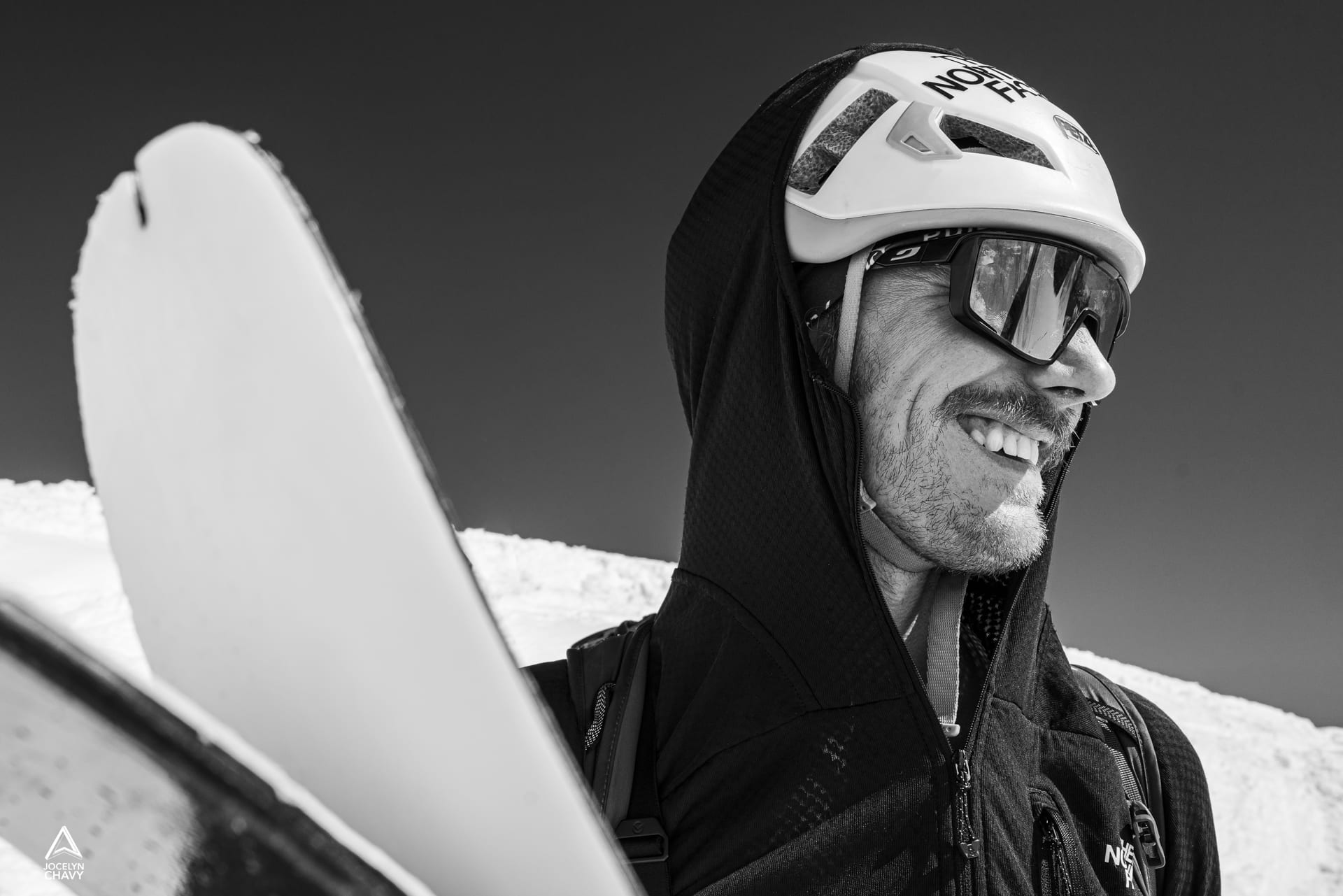
©JC
I will no longer hear his booming voice calling out, “Hey Joce, how’s it going?”
But I want to remember the way he lived. His appetite for projects and encounters. His ability to turn an absurd idea—skiing the Niche des Drus, for example—into a real-life adventure. His way of looking at mountains, always as an explorer drawn toward some unlikely narrow couloir or forgotten route.
We will continue to admire the lines he skied. The Shroud will remain suspended above the void. Snow will continue to whiten the Niche amid the granite of the Drus. From the valley, the north face of the Grands Charmoz will still draw the eye. Gasherbrum II will continue to inspire generations of mountaineers, as will Aoraki and Mount Robson.
But those mountains will be different now for those who were fortunate enough to know Guillaume. His passage through them will remain. His photographs, his films, and his adventures will continue to resonate.
My thoughts are with his family, those closest to him, and all his friends, with immense sadness.
Farewell, Guillaume. The mountains already held so many stories and legends. From now on, they will tell yours as well.