


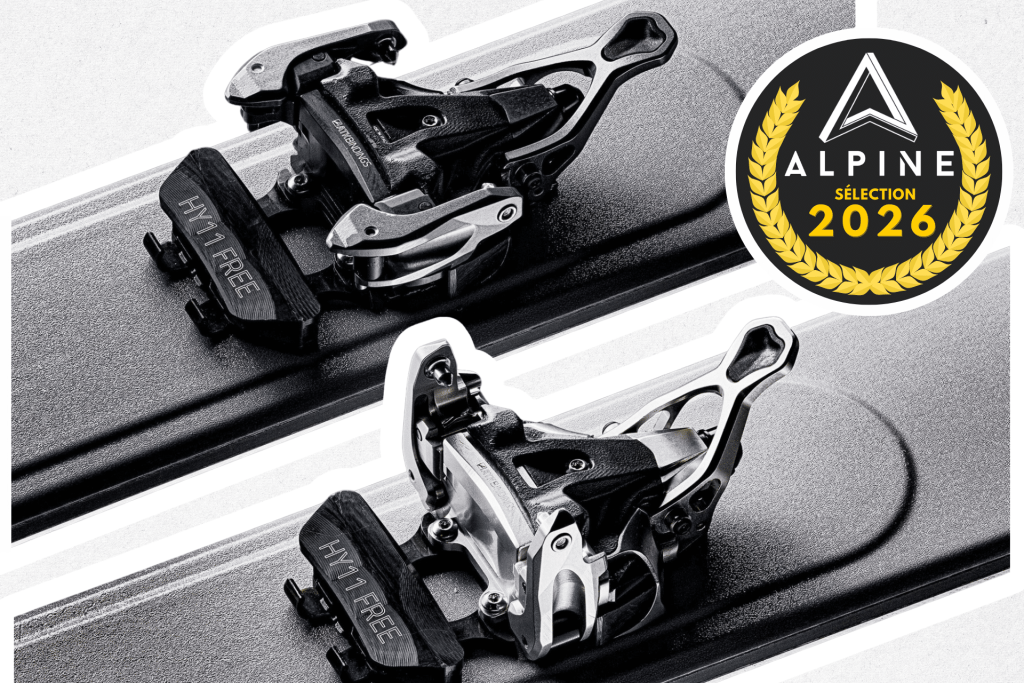
The new ATK HY FREE ski binding is a hybrid binding that sits halfway between classic “Low Tech” systems and “alpine hybrid” bindings such as the Salomon/Atomic Shift or the Marker Duke PT. Its goal is straightforward: to deliver uphill efficiency comparable to lightweight touring bindings, while prioritizing downhill performance close to that of a traditional alpine binding.

On the heights of Les Deux Alpes, Mathieu Maynadier on the trail. ©Ulysse Lefebvre
We had the opportunity to test it as a preview in early December at Les Deux Alpes French ski resort. This was before the recent warm spell, and several dozen centimeters of fresh snow had just fallen—perfect conditions for breaking trail on the ascent and laying down big turns on the descent. The bindings were mounted on 104 mm-underfoot Ferreol Pioneer skis from Quebec.
To join us and share their impressions, several skiers from the ATK France team were present: Liv Sansoz, Victor Lourdel, Mathis Dumas, Mathieu Maynadier, and Noa Barrau. The freeride touring day was off to a great start.

Victor Lourdel. ©UL
A simple yet robust design
At just 675 g per binding (around 1,350 g per pair), the HY FREE is the lightest hybrid binding on the market.
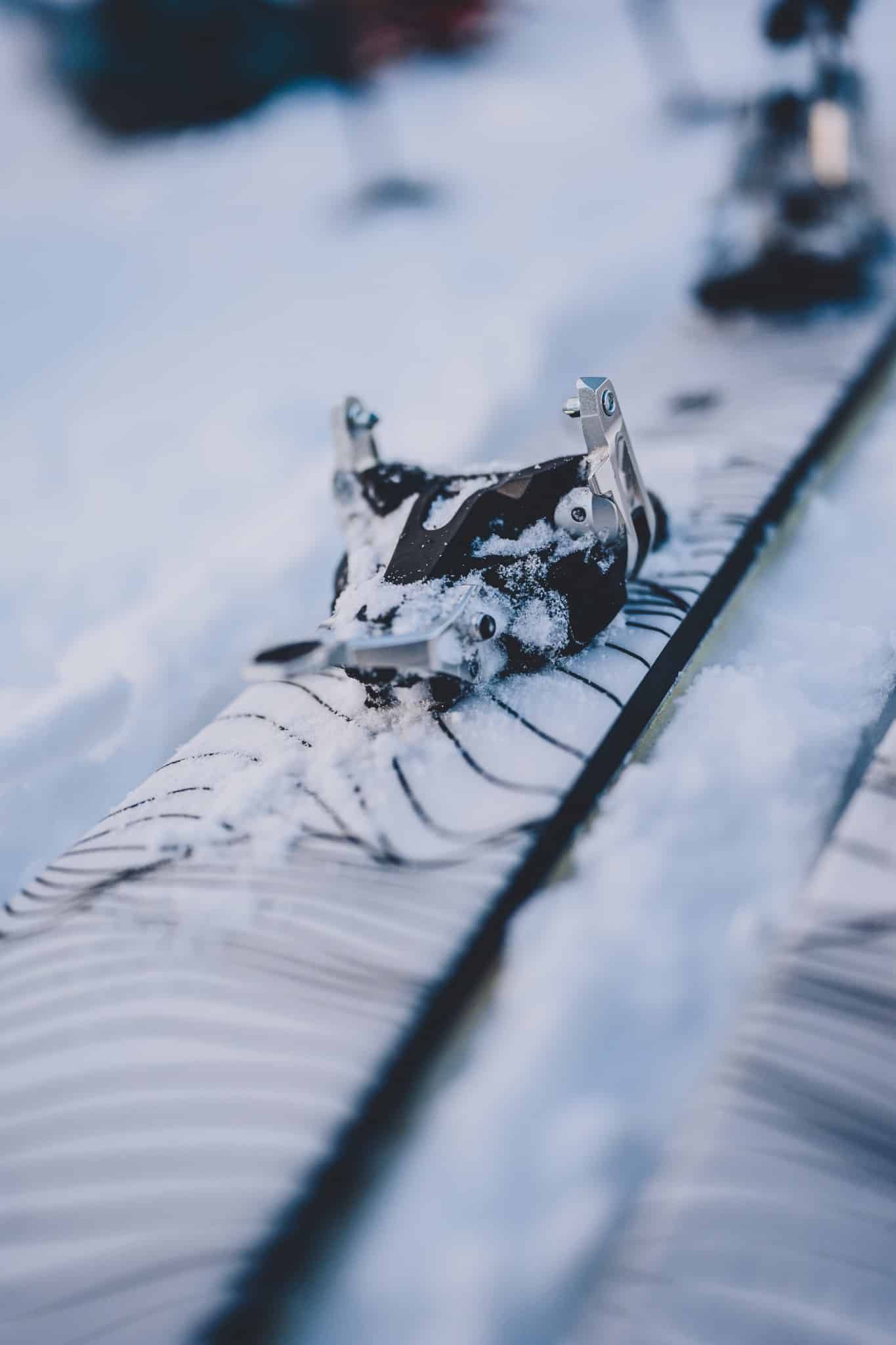
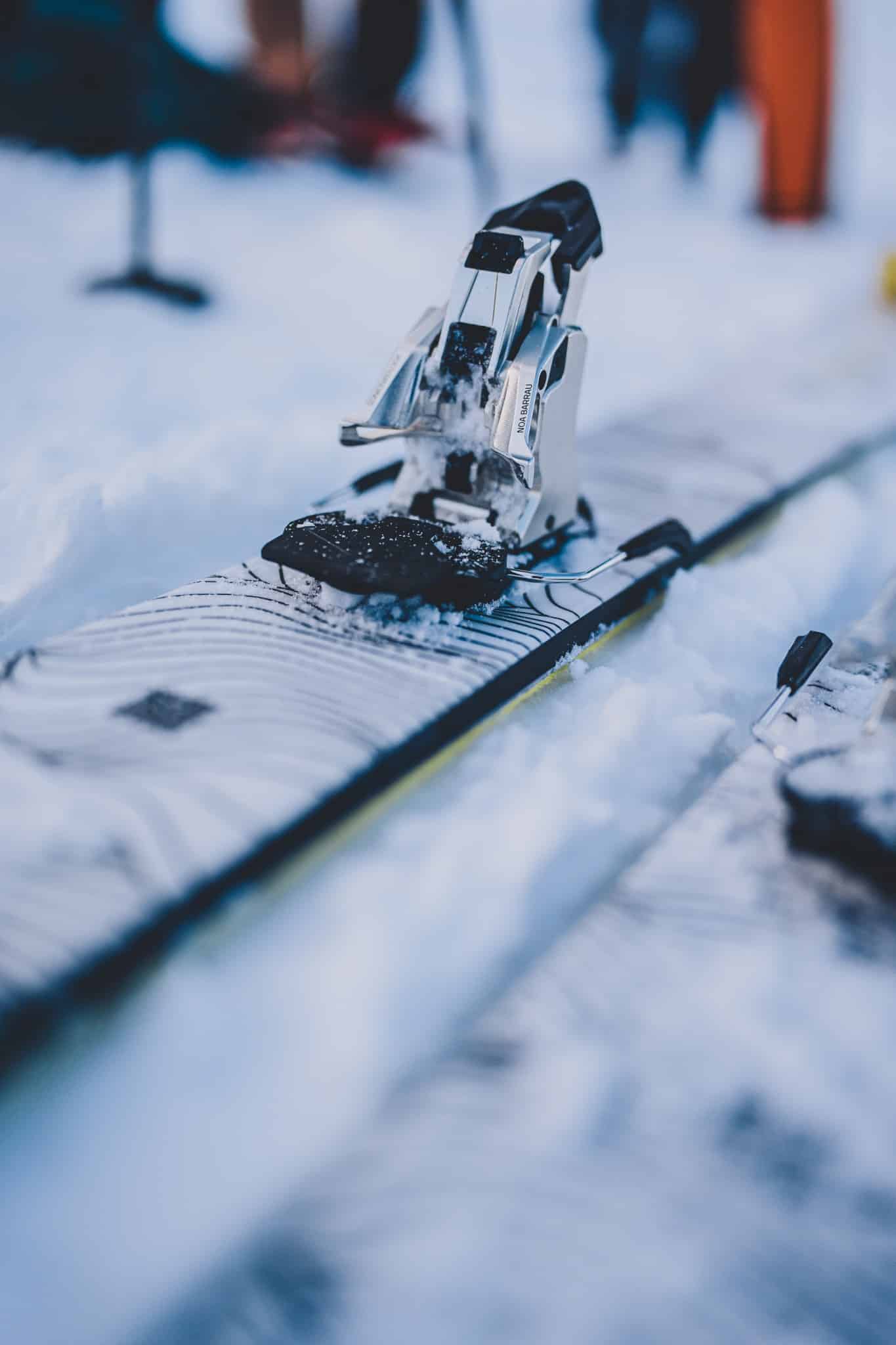
Each structural component is machined from 7075 aluminum. This may appear somewhat raw at first glance, but it is a strong indicator of durability. In fact, the original concept reportedly included no plastic at all. However, a few protective parts made from POM (a highly resistant polymer) were added in this final version to prevent metal-on-metal damage, particularly at the heel unit, where pressure is applied with a ski pole to step out of the binding.
It also features stainless steel components, bringing the total to 54 parts per binding, all materials combined (aluminum, POM, and stainless steel).
©Noa Barrau/ATK
©Noa Barrau/ATK
Intended use
Direct competitors are the Salomon Shift (920 g per binding) and the Marker Duke PT (1,100 g). The HY FREE is by far the lightest of the three. Other bindings can also be mentioned, such as the Marker Kingpin (715 g), the Ski Trab TR1 (685 g), or the ATK Freeraider 15 (395 g), but these are designed for a more touring- or freerando-oriented use.
The HY FREE is therefore well suited for freeride touring and freeride with moderate vertical gain (400 to 600m). Of course, the strongest skiers can push it further, but its primary focus remains optimal downhill performance.
One of the key objectives of the HY FREE is to make transitions fast and intuitive. Some users may recall that the Shift, for example, can occasionally be tricky to operate. Here, the Italian brand has developed a notably smooth and fluid system.
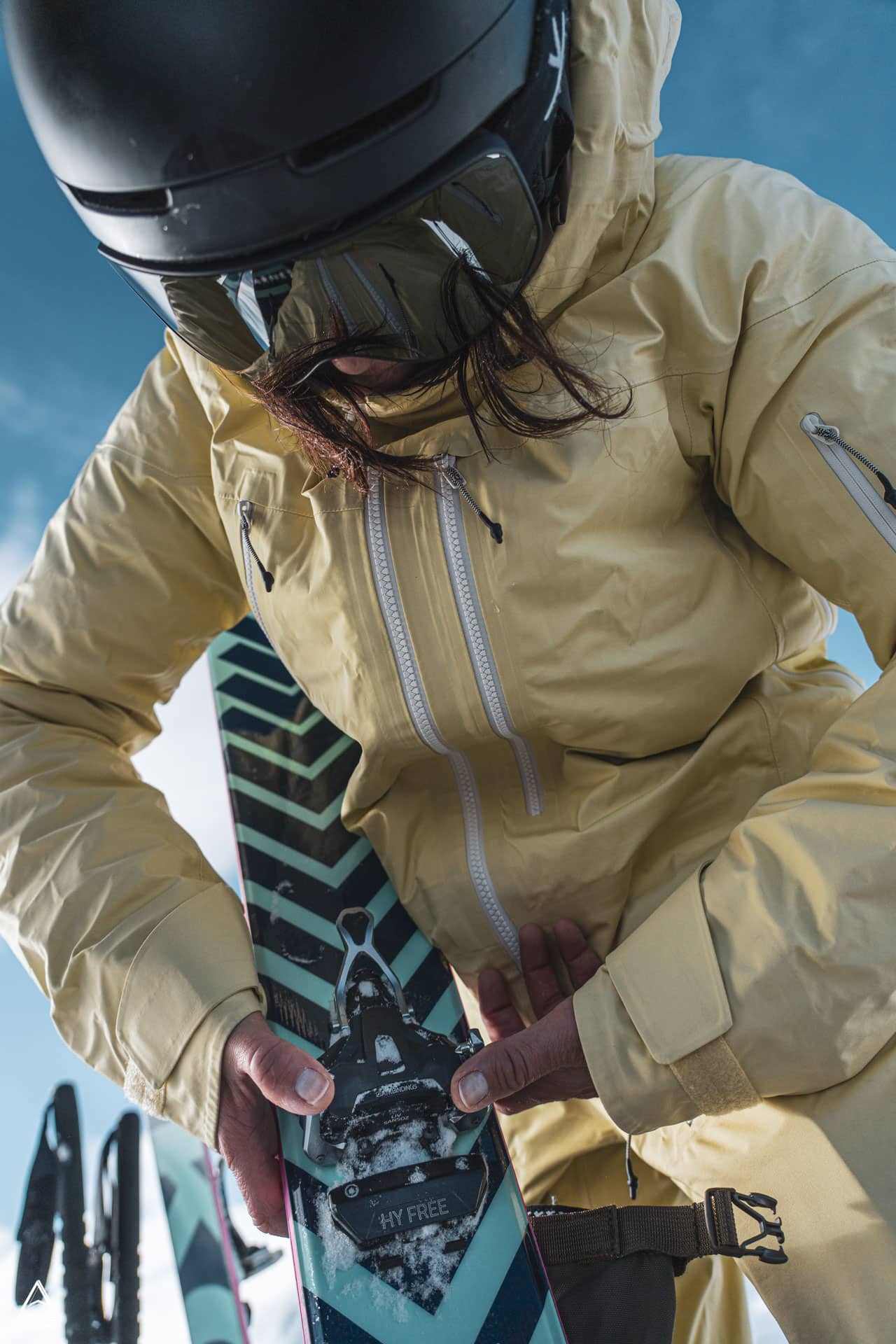
Let’s go downhill! Liv Sansoz getting ready. ©UL
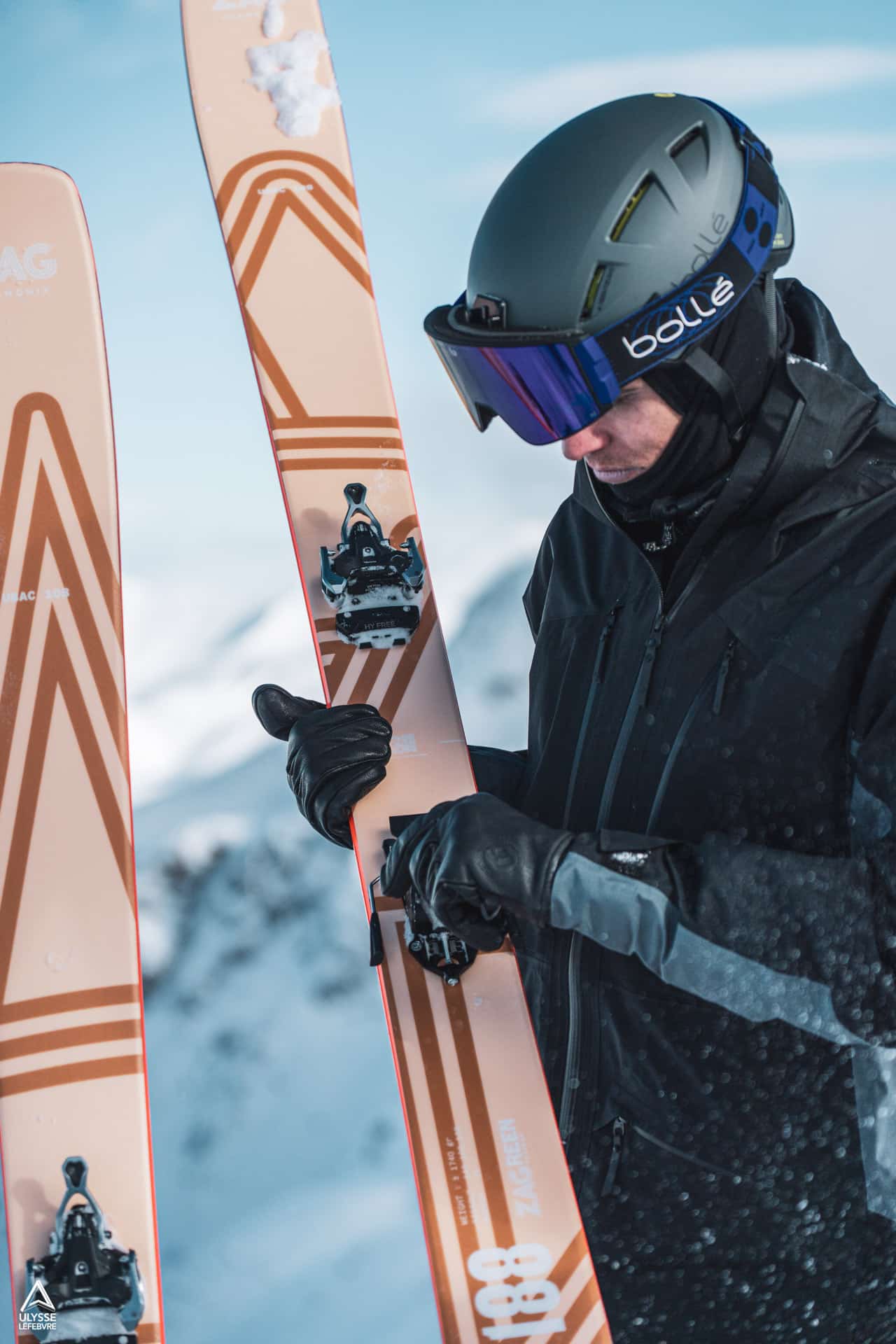
Victor Lourdel is also getting ready to ski. ©UL
Chaussage
Fitting into the binding is done much like with a classic pin binding, with one notable difference: the two toe inserts of the front unit must be flipped upward. While this movement may seem surprising at first, it is actually very easy to perform and requires no force. The motion is smooth and can be done comfortably while wearing gloves.
Even without a guiding system like those found on some bindings, it’s straightforward to get everything ready to ski. The feel is familiar and intuitive.
At the rear, simply lifting the heel unit by one click brings the ski brake into the ascent position (the HY Brake System heel unit).
For the descent, the insert « arms » pivot forward, creating a toe interface worthy of an alpine ski binding.
snapping the heel down just like on an alpine binding.
Admittedly, it’s quite exhilarating…
At the rear, lowering the heel unit allows the ski brake to return to its braking position (it is actually referred to as a “ski brake” rather than a “stopper,” as its dimensions do not necessarily guarantee a full stop, but rather help slow the ski and make it easier to retrieve).
From there, the binding is ready to step into, and you rediscover the pleasure of engaging the front of the boot into the insert arms, before snapping the heel down just like on an alpine binding. Admittedly, it’s quite exhilarating…
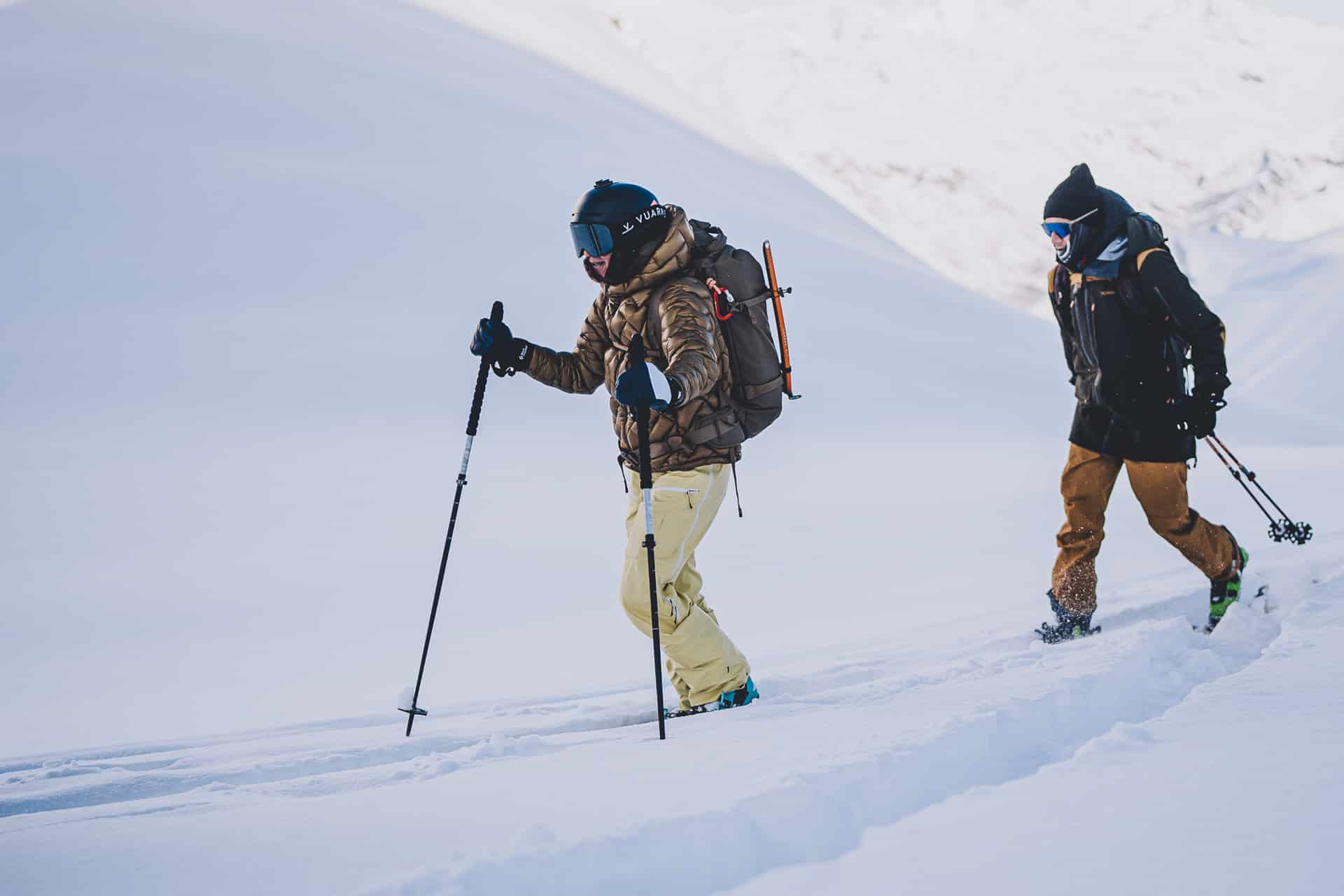
Liv Sansoz and Mathieu Maynadier uphill. ©Noa Barrau
Touring mode
The binding offers several climbing positions:
- –18 mm (so-called “negative” mode), designed to optimize stride efficiency on flat terrain or during approaches. This is particularly beneficial when using skiboots with limited cuff mobility.
This is one of the distinctive features of the binding. The rearward rotation of the inserts in touring mode requires functional clearance, which results in a raised position relative to the ski.
However, ATK has turned this technical constraint into an advantage: it mathematically increases the total pivot angle of the boot—often freerando-oriented boots with limited cuff range of motion.
As a result, the stride is lengthened thanks to this increased pivot angle, achieved through the 18 mm “negative” travel. - +10 mm and +42 mm are available for steeper climbs.
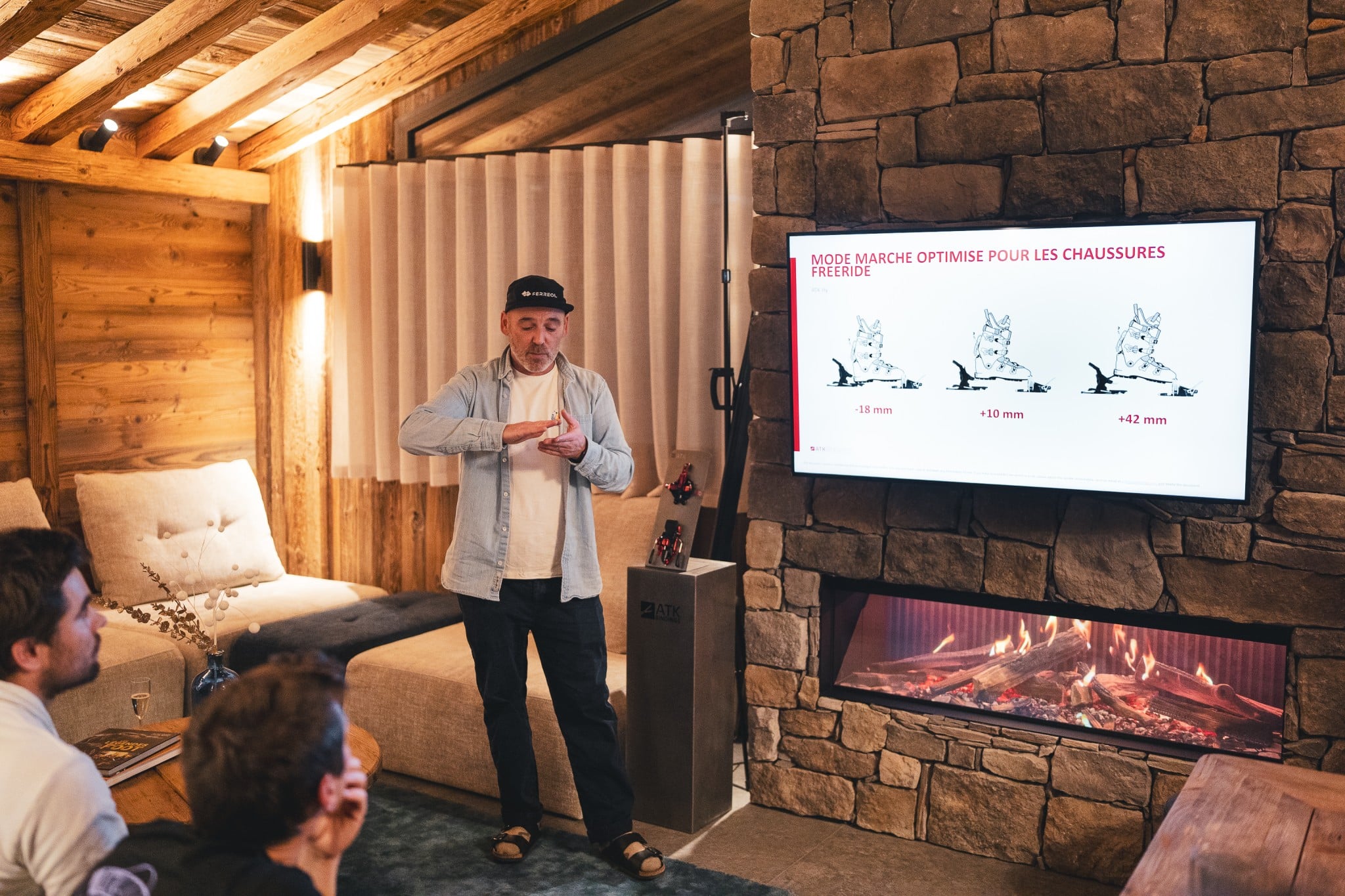
Rodrigue Ducloz, responsible for the ATK brand in France, explains the principle of the «negative mode» of the HY FREE fixation.©Noa Barrau
Descent
After a few hundred meters of vertical gain, it was finally time to test the binding on the descent. The alpine-style step-in is particularly appreciated in the soft, inconsistent powder, which can make it tricky.
In this downhill position, the boot sits completely flat and, most importantly, very close to the ski. This is one of the key strengths of the ATK HY FREE: it provides precise control with better power transfer to the skis, while still delivering a skiing feel very close to that of an alpine binding.
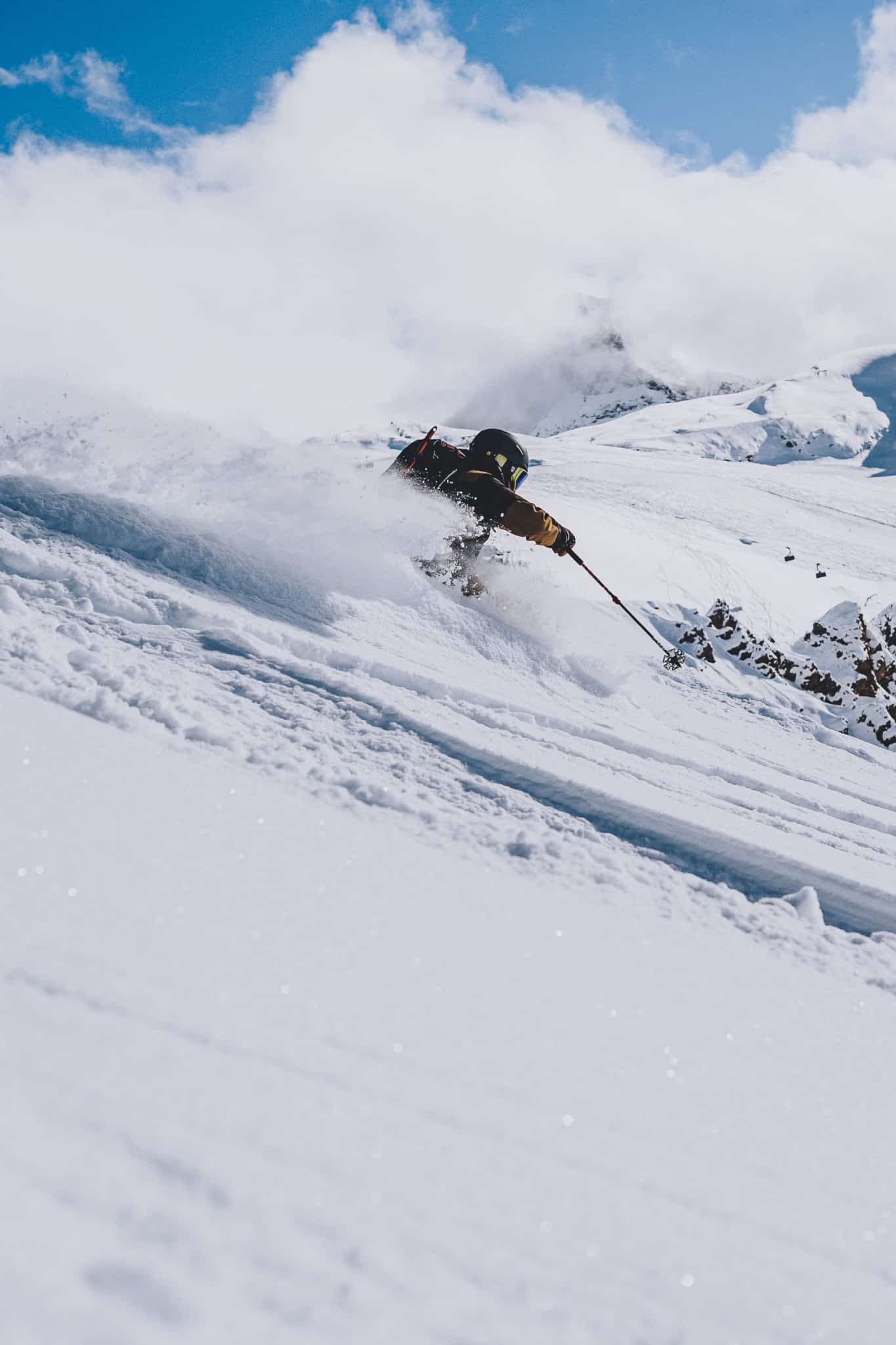
Mathieu Maynadier. ©Noa Barrau
©UL
An elastic binding!
Another notable feature is the “elastic travel,” which absorbs some of the impacts and vibrations. With around 9 mm horizontally and 10 mm vertically, the ATK HY FREE allows for a more predictable and stable behavior on variable snow, helping avoid those dreaded teeth-clenching knocks on hard snow. It’s important to note that this functional part is independent of the release value setting.
Speaking of which, this ranges from 4 to 11 for the HY FREE 11 version, and 6 to 13 for the HY FREE 13 version.

©UL
Compatibility
The HY FREE accepts a wide range of skiboots: Touring (ISO 9523), GripWalk (ISO 23223), and Alpine (ISO 5355).
However, it is important to properly adjust the anti-friction device (AFD) using the appropriate spacers for the boot sole to ensure reliable release performance.
CONCLUSION
The ATK HY FREE represents a new step in the evolution of hybrid bindings: it combines premium construction, extremely low weight, and excellent downhill performance for a mixed-use binding.
It does have a few features that require careful handling (adjustments, sole compatibility), but it is a serious option for those looking to reduce compromises without having to own multiple pairs of bindings.
Its high price, a consequence of its top-quality machining, may be off-putting, but it will likely become the number one choice for freeride touring enthusiasts.
It is available at major ski and outdoor gear retailers.
Specifications
WEIGHT : 675 g. per binding, 1350 g. for 2 VERSIONS : HY 11 FREE (DIN 4-11) – HY 13 FREE (DIN 6-13) PRICE : €799