
I remain haunted by the apparent futility of mountaineering. In a world in disarray, where the search for meaning is a daily struggle, it is a brutal admission. Paradoxically, it took a personal tragedy for me to glimpse a few glimmers of light in it. I usually shy away from writing in the first person, but this time a few intimate notes found their way into this expedition story. On Mount Logan, in the Yukon, I screamed my grief into the wind and wove my mourning, crevasse after crevasse. The story I have brought back cannot leave that out. This is the first episode.
“Still, one had to be somewhere while waiting for morning, somewhere in the night.”
Journey to the End of the Night, Céline
It never gets fully dark in the Yukon spring. At 60° north, the sun slips behind the ridgelines but always leaves a few rays lingering until morning. It is around 4 a.m., at the darkest point of the night, that David’s voice rings out: “Ulysse, can you come and give me a hand?” The Québécois accent of our guide, usually so warm, chills me to the bone.
©UL
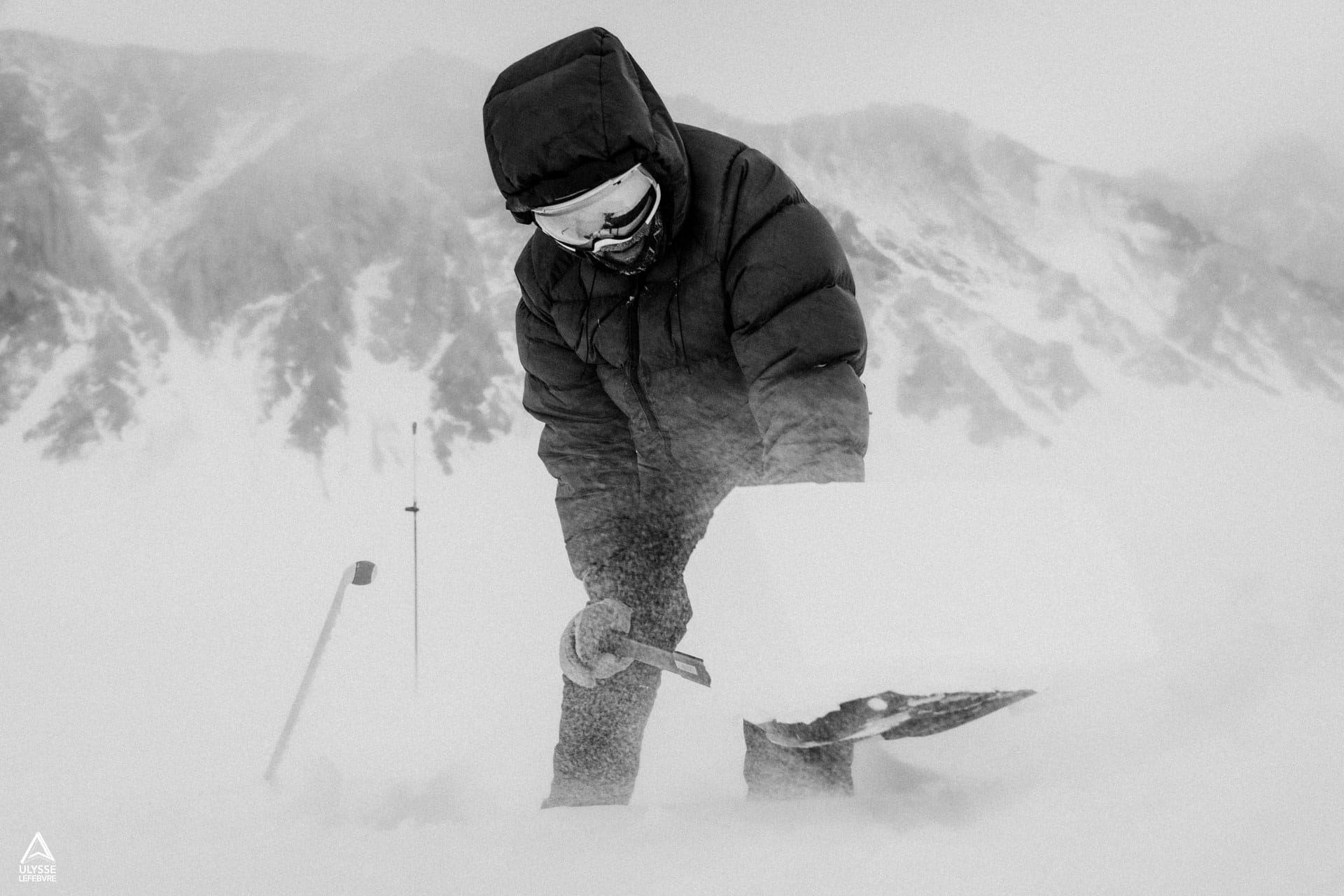
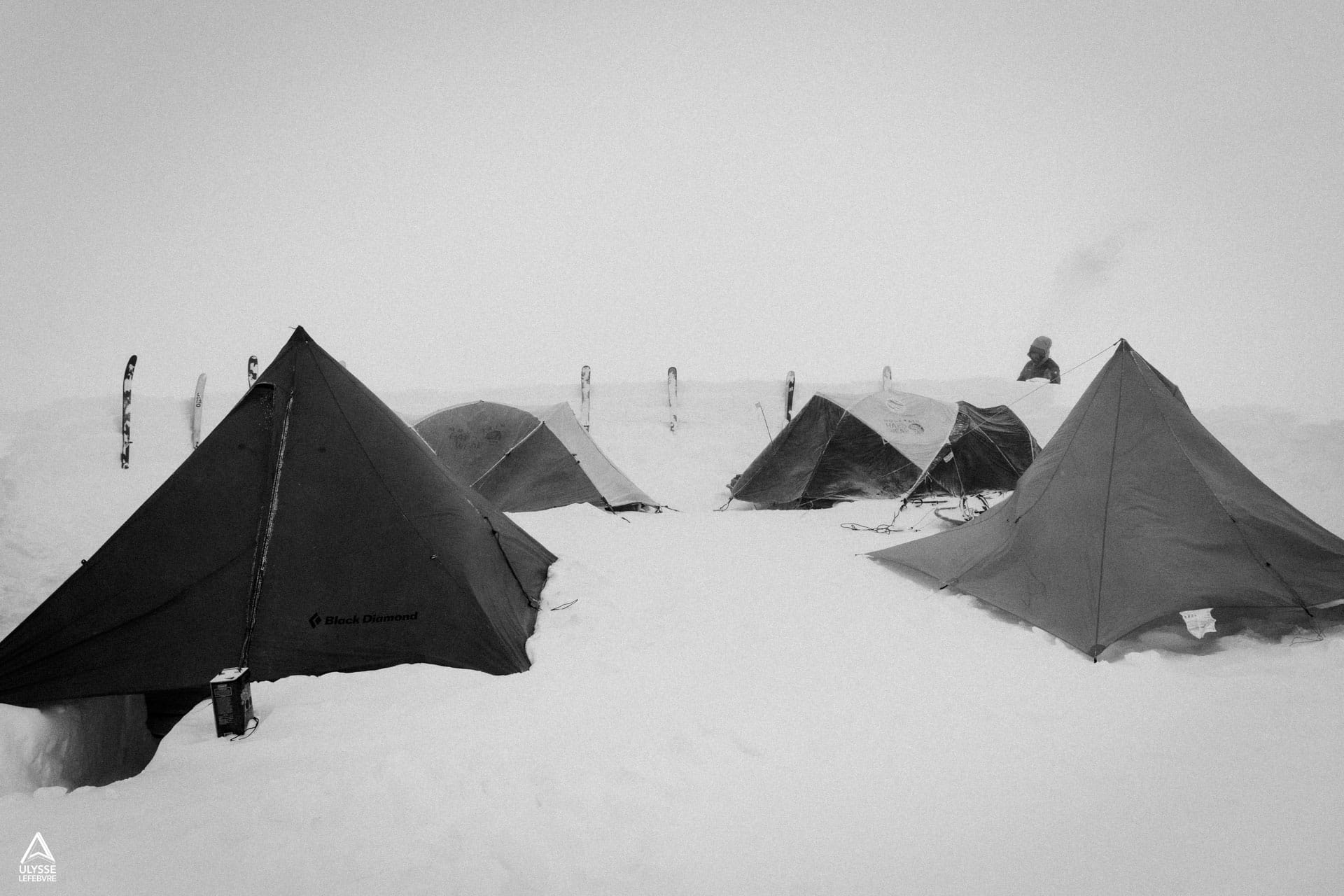
To be honest, I was expecting it, even though I could barely make out the call through the brutal gusts battering heads and tents alike. A snowstorm had been forecast for two days already. But its intensity far exceeds the forecast, especially at the still-modest altitude of Camp 1, at 3,301 m.
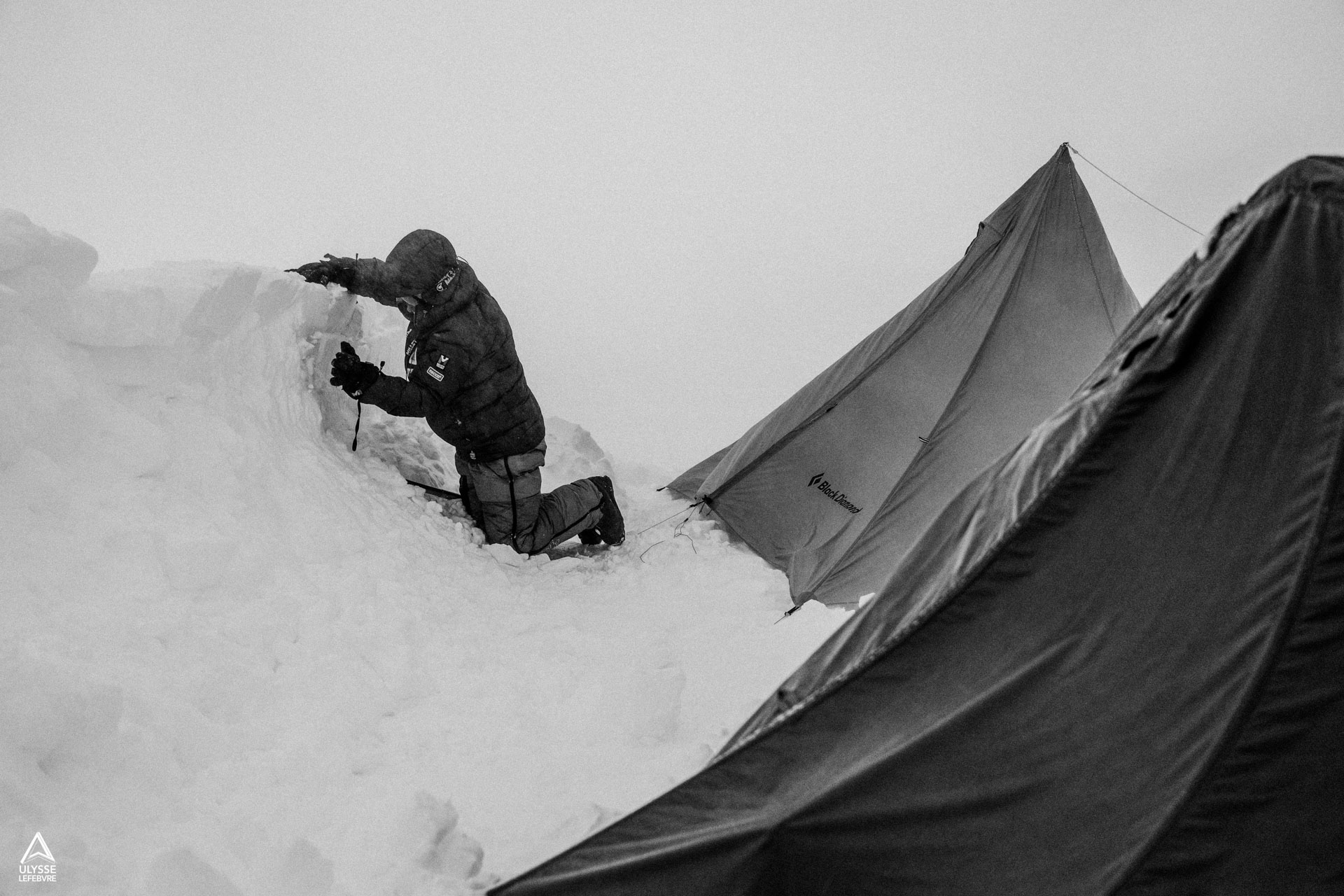
We did build a few snow walls, but they collapsed under the force of the gusts and now have to be rebuilt. The tents are firmly anchored, but they are being buried under drifting snow, when they are not bending dangerously in 100 km/h winds. So we have to dig them out, reset the anchors, hold the poles… “High-altitude mountaineering is not a pleasure, it is a chore,” Reinhold Messner once said.
©UL
The hardest part of any expedition is dragging yourself out of your sleeping bag every morning. Doing it on a freezing night, pulling on ski boots as stiff as boards and throwing yourself into the jaws of a storm, remains the greatest mystery of mountaineering, from its origins to the present day: “What the hell am I doing here?”
But David is waiting for me and there is no time to dawdle. I unzip the few millimetres of nylon separating me from this white hell and am instantly hit by a gust. Down on one knee.
To the very minute
I go into round two, but I am very quickly on the verge of a knockout. Not from the wind this time. Just as I grab my shovel and start digging a trench in the snow, I realise that my father died two months earlier, to the day. To the very minute. Rage. Most of my scream is muffled by the layers of clothing over my mouth; the rest is lost in the clouds. And David hands me another snow block to stack on the wall slowly rising in the half-darkness.
©UL
My father had just died in an accident, at the very age when you can finally break free from work. A world was collapsing. Stunned by news I could not take in, I dealt with the formalities. On the surface, I was holding up.
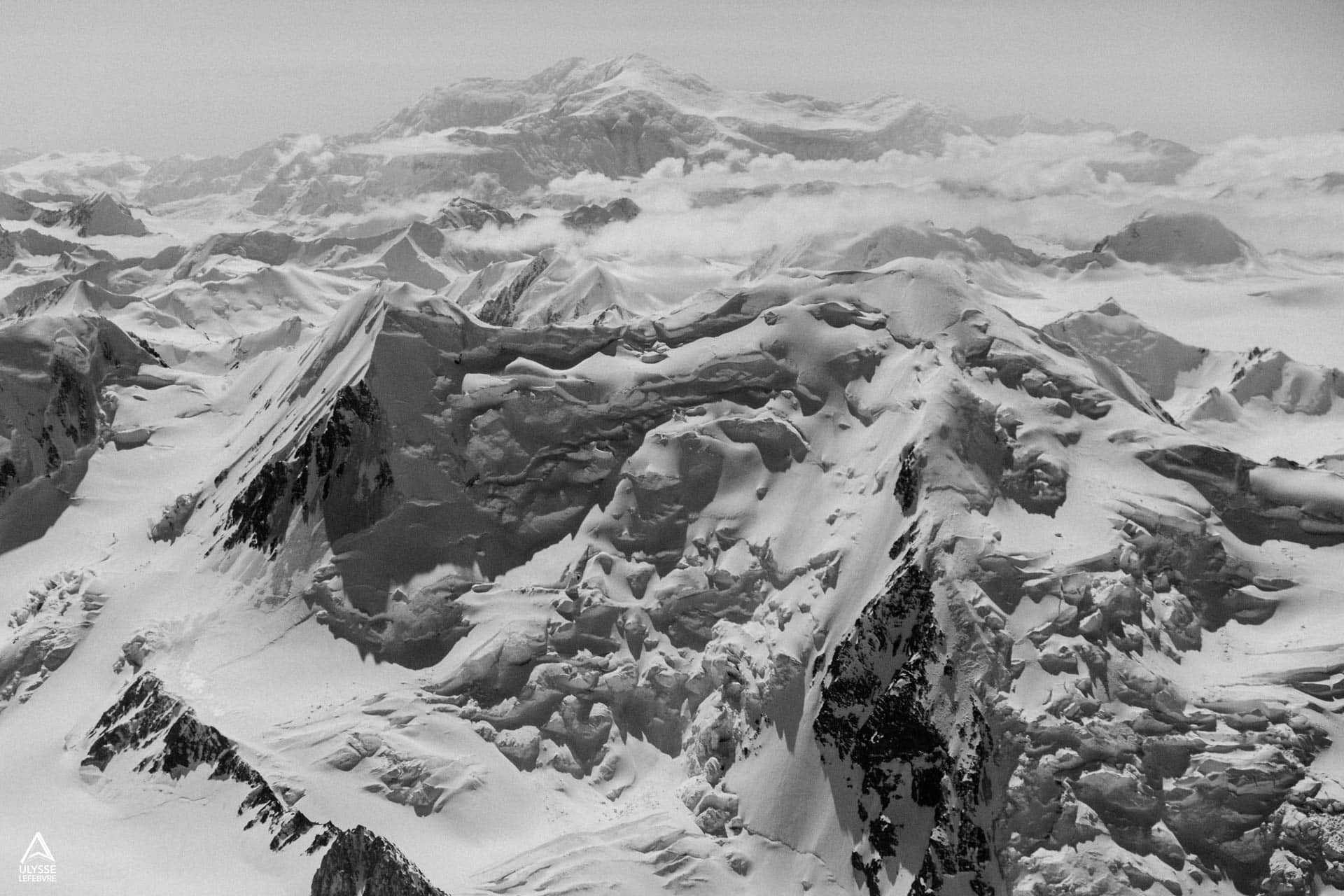
But another world kept on turning, one where nobody talks about the colour of the coffin or the opening hours of the local morgue. Sophie Lavaud asked me to join her once again to document her expedition to Mount Logan. It had worked out well when we were together on Nanga Parbat in 2023. This time, she was taking on Canada’s highest peak. The plan had come together in the middle of the funeral. The expedition was confirmed. I had to make up my mind.
©UL
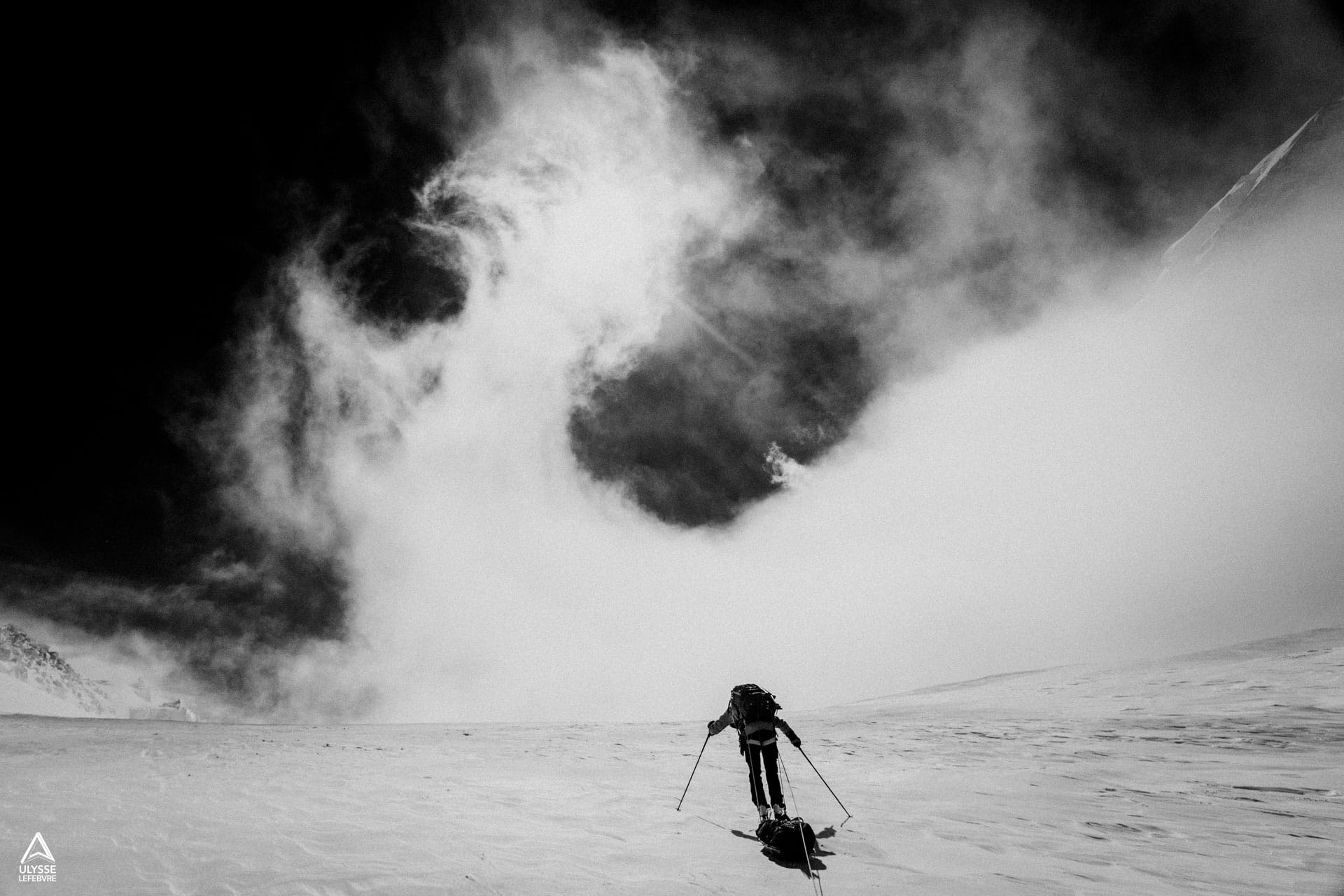
It all started like this. With reasons to find: reasons to go, or reasons to stay. How could it be otherwise? We rarely talk about the reasons for heading into the mountains, on an expedition, off on an adventure. As if setting off for several weeks to the ends of the earth were a gratuitous act, a heroic impulse of irresistible force. Beyond any possible doubt. Nonsense. If mountaineers carry big packs, it is to cram in all the kit they need for brooding. Cogito ergo conscendo. I think, therefore I climb.
©UL
I couldn’t just leave
as if nothing had happened
My participation – or my withdrawal – was therefore bound to be intimately tied to my father’s death. In other words, I couldn’t just leave as if nothing had happened. And the story I would live out there, like the one I would tell, would inevitably bear the marks of the grieving I was going through. I would have to bring together the intimacy of this ordeal and the universality of a summit. Not to mention my aversion to putting myself at the centre of the story, which I probably would not be able to escape this time, at least not entirely.
It was against this backdrop that I had to decide whether it was a good idea to take on a remote, rarely climbed and demanding peak, with some of the worst weather conditions imaginable. All of that less than two months after burying my father.
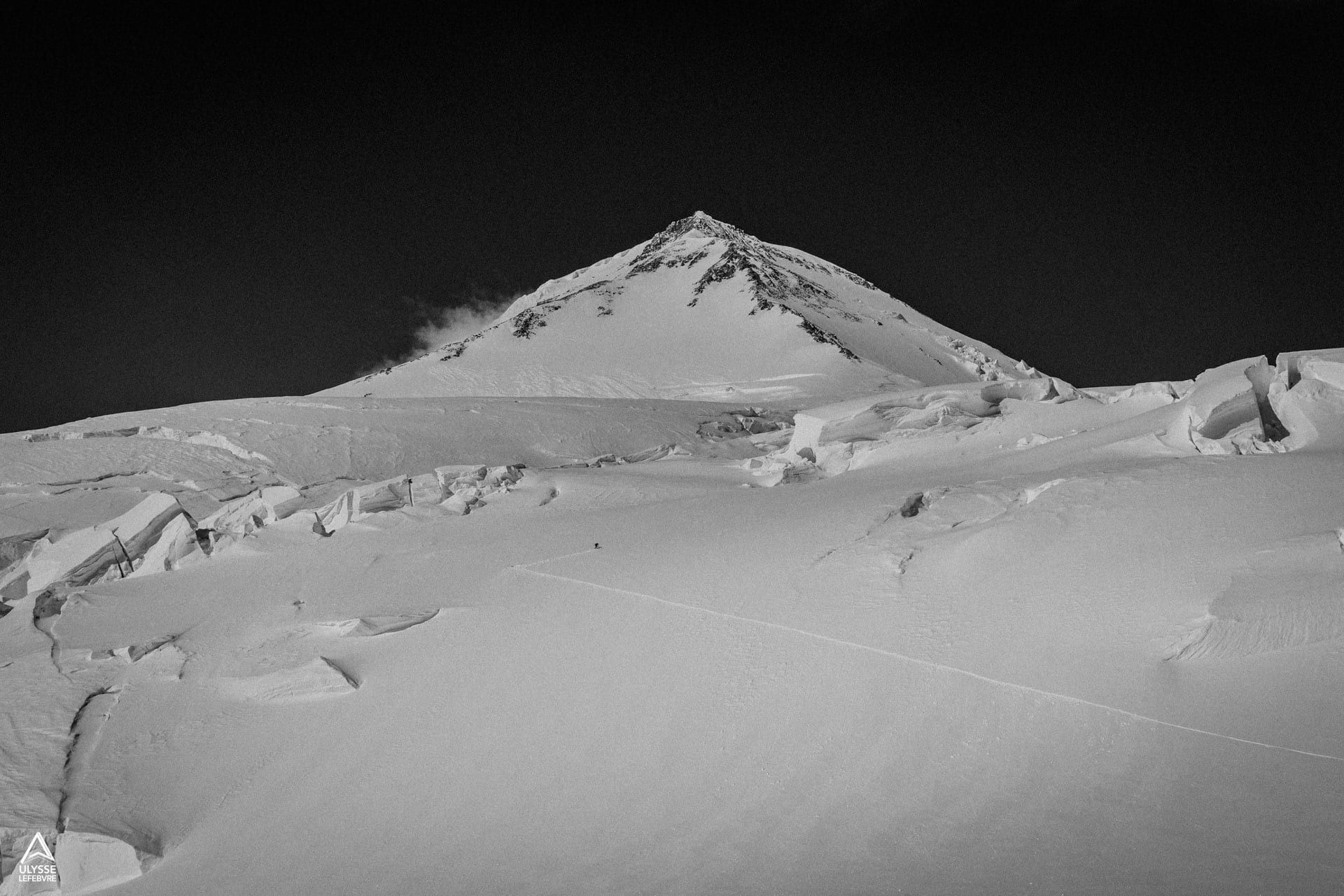
©UL
What would I write in it?
I didn’t know yet
Yet little by little, things were becoming clearer. Perhaps this was, after all, the best possible time for this journey to the end of my night. I eventually talked it over with those closest to me. They listened and seemed to understand.
Doubt gave way to the certainty that the time had come for an interlude. What would I write in it? I didn’t know yet. But the white expanse of the Far North might just become a great blank page waiting to be filled. Unless I was charging headlong into the jaws of Logan?
Continue reading in Episode 2: The Undertow
All episodes in the series